
Render Systems for Coastal Environments: What Australian Architects Need to Know
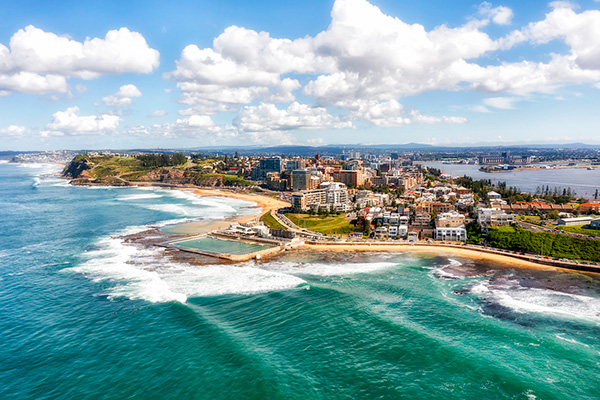
Australia's population, and the bulk of its commercial and residential construction, sits overwhelmingly close to the coast. From Sydney's harbourside developments to Brisbane's bayside suburbs and the long stretch of coastal corridor connecting most of the country's major cities, a very large proportion of Australian building stock exists in some degree of coastal exposure. For architects, specifiers, and builders working on these projects, the facade system specified is one of the most consequential decisions in the building's design — because coastal conditions are unforgiving of render systems that aren't engineered to withstand them.
This post examines what makes coastal environments particularly demanding for facade systems, what specific properties a render system needs to perform reliably in these conditions, and how Sto's approach addresses the combination of challenges that coastal construction presents.
Why Coastal Conditions Are Different
Coastal environments combine several stresses that, individually, are challenging for facade systems, but which together create a particularly demanding combination of conditions. Salt-laden air is the most distinctive factor — airborne salt particles, carried inland by onshore winds, settle on exterior surfaces and accelerate the corrosion and degradation of materials that aren't specifically resistant to this exposure. The effect is most pronounced within the first few hundred metres of the coastline but can extend considerably further inland depending on wind patterns and topography.
High humidity is a near-constant feature of coastal climates across most of Australia, creating sustained moisture exposure that tests the breathability and water resistance of any render system. Combined with intense UV radiation — itself amplified in many coastal locations by reflection off water and light-coloured sand — facades in these environments face accelerated degradation of pigments, surface coatings, and the underlying render material if it isn't formulated to resist these specific stresses.
Wind-driven rain adds a further dimension. Coastal locations frequently experience higher average wind speeds than inland areas, and during storm events, this drives rain directly into facade surfaces with considerably more force than typical rainfall. A render system that performs adequately under still conditions can fail under sustained wind-driven moisture loading if its weathertightness hasn't been specifically tested for this scenario.
How Traditional Renders Fail in Coastal Conditions
Conventional cement-based renders are particularly poorly suited to coastal environments. Their rigid, brittle structure means they crack readily under the thermal cycling that coastal climates produce — and once cracked, those fissures become entry points for salt-laden moisture, which accelerates deterioration of both the render and the substrate beneath it. Cement-based renders are also more porous than purpose-engineered alternatives, allowing salt and moisture to penetrate the material itself, leading to efflorescence, staining, and progressive structural weakening over time.
The visual consequences are equally significant for architects and developers concerned with long-term aesthetic performance. Surface coatings on coastal facades that aren't formulated for UV and salt resistance fade, chalk, and discolour considerably faster than the same coatings would in inland environments — a particular concern for premium residential and commercial developments where facade appearance is central to the project's market positioning.
What a Coastal-Performance Render System Needs to Deliver
A render system intended for coastal application needs to address each of these stresses directly, rather than simply being a general-purpose product applied without modification.
Flexibility and crack resistance are foundational. A render system that can accommodate thermal movement without cracking eliminates the primary mechanism by which salt and moisture penetrate the facade. Sto's StoArmat render, as an organically bound, cement-free system, delivers crack resistance six times higher than standard cement-based products — a property that is particularly valuable in coastal applications where any crack becomes a direct pathway for accelerated, salt-driven deterioration.
Breathability paired with water repellence is essential for managing the humidity and wind-driven rain that coastal facades experience. The render needs to resist liquid water penetration from the outside while still allowing moisture vapour generated within the building to escape — a balance that rigid, impermeable systems cannot achieve, and which becomes more critical the closer a building sits to the coastline.
UV and colour stability matter significantly for the long-term appearance of coastal facades, given the intensified UV exposure that many coastal locations experience. A coating system formulated for UV resistance maintains its colour and surface integrity for considerably longer than a standard formulation, protecting both the building's appearance and the value of the facade investment.
Self-cleaning and low-maintenance properties are a meaningful practical advantage in coastal settings, where salt deposit and surface grime can accumulate more readily than in inland environments. A facade coating with genuine self-cleaning properties reduces the frequency and cost of manual cleaning that coastal buildings typically require.
The Sto Approach to Coastal Facade Performance
Sto's render and coating systems are engineered to address each of these requirements as part of an integrated system, rather than relying on a single product to solve every challenge. StoArmat render provides the structural foundation — its organic, cement-free formulation delivering market-leading impact resistance of up to 50 joules alongside its crack resistance, ensuring the facade can withstand both the thermal stress and the physical demands of a coastal environment, including debris carried by coastal winds.
Over this base, StoColor coatings — including StoColor Lotusan with its lotus-leaf-inspired self-cleaning technology — provide the weather-facing protective layer. Lotusan's water-repellent surface technology reduces the adhesion of dirt, algae, and salt deposit, helping coastal facades maintain their appearance with less frequent maintenance than conventional coatings require. The StoColor System's full colour range, including custom matching via the Sto Spectrometer, allows architects to specify coastal-appropriate finishes without compromising on design intent.
BRANZ Appraisals and Compliance Confidence for Coastal Projects
For architects and specifiers working on coastal projects — where facade performance carries real consequences for both compliance and long-term liability — independent verification matters. Sto Australia holds nine BRANZ Appraisals covering twelve construction systems, providing documented, third-party-verified compliance with the structural, weathertight, and durability requirements of the National Construction Code. This gives specifiers a defensible basis for choosing a render system in coastal applications, where the consequences of an underperforming facade system are amplified compared with inland projects.
Coastal Construction Across Australia's Capital Cities
Many of Australia's most significant construction markets sit directly on the coast, and the implications extend well beyond beachfront property. Sydney's harbourside and eastern suburbs developments, Brisbane's bayside and riverside precincts, and coastal corridors surrounding Melbourne, Adelaide, and other capital cities all experience some degree of the conditions discussed in this post. For projects in Brisbane specifically, the combination of coastal exposure and subtropical humidity makes facade system specification a particularly significant decision, and the same StoArmat and StoColor combination discussed here applies directly to projects across south-east Queensland's extensive coastal development.
Specifying With Confidence for Coastal Projects
If you are working on a project in a coastal location and need guidance on facade system specification, Sto Australia's technical team can advise on the right combination of render, reinforcement, and coating systems for your project's specific exposure conditions. Explore the full Sto render systems range, or contact us directly on +61 3 9768 4900 or at .