
Exterior Facade Paints: The StoColor Range
Last updated 30 September 2026
Sto exterior facade paints are water-based coatings for the outermost layer of a facade, developed for architects, specifiers and builders who need a colour coat that performs as well as it looks. The StoColor range covers four situations: StoColor X-black, a heat-reflective facade paint for dark colours; StoColor Lotusan, a self-cleaning facade paint; StoColor Maxicryl, a pure acrylate paint for intense colour; and StoColor Lastic, an elastomeric facade paint for minor cracks. All four are applied by brush or roller, and colour is specified through the 800-shade StoColor System.
What Sto exterior facade paints do
A facade paint is the layer between the substrate and the weather, and it is also the layer people see. It has to look right on the day of completion and keep protecting the wall long after. Each paint in the StoColor range is highly water-repellent, classed W3 (low water permeability) under EN 1062-1, and permeable to water vapour to differing degrees, so liquid water is kept out while the wall can still release moisture vapour.
What separates the four is the problem each was built to solve. Sto's iQ Intelligent Technology approach, which draws on the company's research into bionics and surface science, sits behind the two most distinctive paints: the Lotus-Effect® in Lotusan and the near-infrared pigment technology in X-black. The table below sets the range side by side, and the sections that follow explain when each one is the right specification.
The StoColor facade paint range at a glance
| StoColor X-black | StoColor Lotusan | StoColor Maxicryl | StoColor Lastic | |
|---|---|---|---|---|
| Best suited to | Dark and intense colours where solar heating is a concern | Facades where reduced dirt adhesion matters | Intense, stable colour on mineral and organic substrates | Minor cracks on existing facades with low movement risk |
| Type | Pure acrylate, NIR pigments | Polymer dispersion, Lotus-Effect® Technology | Pure acrylate | Highly elastic polymer dispersion, UV-crosslinking |
| Finish | Matt | Matt | Matt | Silk matt |
| Dry layer thickness (double coat) | 150 µm | 160 µm | 150 µm | 410 µm |
| Water permeability (EN 1062-1) | W3, low | W3, low | W3, low | W3, low |
| Vapour diffusion (EN ISO 7783) | sd 1.25 m, V2 (medium) | sd 0.01 m, V1 (high) | sd 1.14–1.33 m, V2 (medium) | sd 1.6 m, V3 (low) |
| Colour | Factory-tinted to StoColor System shades; not tintable by the applicator | White; limited tintability in the StoColor System | White; tintable in accordance with the StoColor System | White; tintable in accordance with the StoColor System |
| Application | Brush, roller, airless sprayer | Brush, roller, airless sprayer | Brush, roller, airless sprayer | Brush, roller |
| Overcoatable after (20°C, 65% RH) | About 8 hours | About 8 hours | About 8 hours | About 12 hours |
| Consumption per coat | 0.15–0.18 L/m² | 0.18–0.20 L/m² | 0.15–0.18 L/m² | 0.35–0.45 L/m² |
| Not suitable for | Horizontal or sloping surfaces subject to weathering | Horizontal or sloping surfaces exposed to weathering | Horizontal or sloping surfaces subject to weathering | Horizontal or sloping surfaces; lime-containing substrates |
Scroll sideways to see all four paints.
Values are from the Sto technical data sheets and are tested to European (EN) standards. Consumption is indicative only.
 |
 |
 |
 |


StoColor X-black: heat-reflective facade paint for dark colours
StoColor X-black is a heat-reflective facade paint for facades finished in dark or intense colours. Dark surfaces absorb solar radiation, and Sto's brochure notes that a facade surface combining dark colour and direct sun can exceed 80°C, which can lead to cracking and distortion. X-black replaces standard black pigments with near-infrared (NIR) reflective black pigments, and the other pigments and fillers used for individual shades are formulated for NIR reflection too. Around 58% of solar energy arrives in the invisible near-infrared band, so reflecting it keeps dark surfaces cooler. Sto's brochure puts surface temperature peaks below 70°C, against 80 to 85°C for standard pigments.

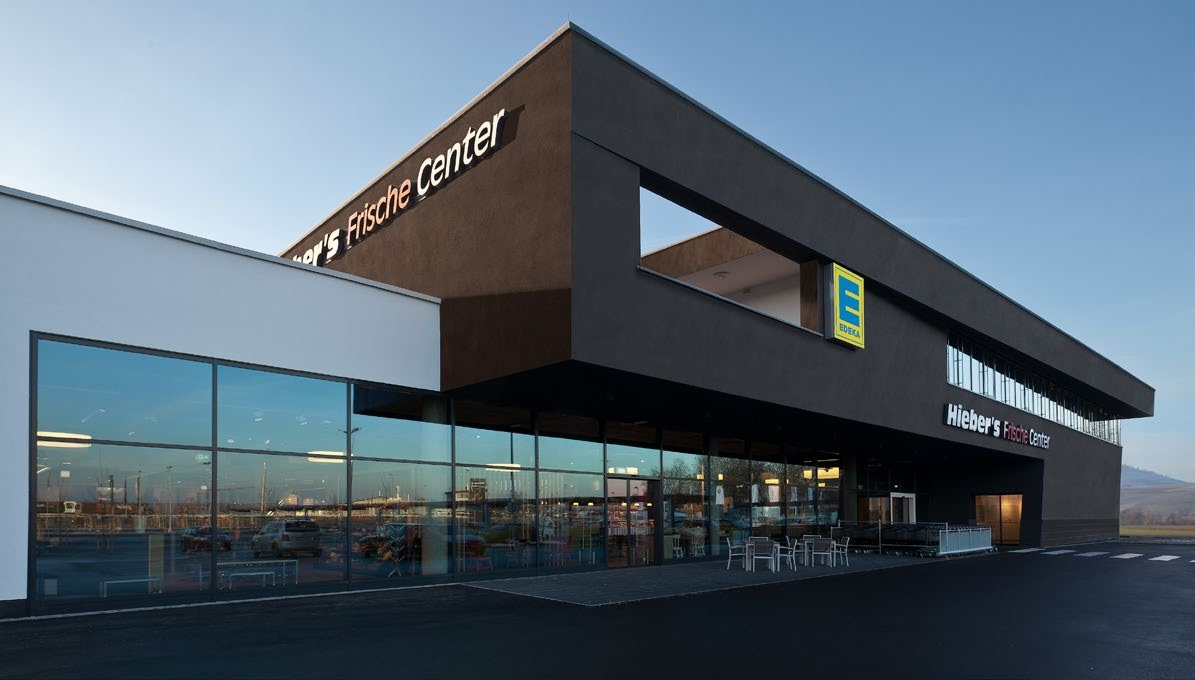
The technical data sheet lists the properties that matter to specifiers: it reflects the near-infrared components of sunlight, reduces solar heating of facade surfaces and increases protection against crack formation in the substrate. It is a matt, pure acrylate paint for mineral and organic substrates, applied in two coats by brush, roller or airless sprayer, and it can also be used as a renovation coat on external wall insulation and monolithic surfaces.
Two practical points apply. X-black is tinted at the factory to StoColor System shades, or others on request, and cannot be tinted by the applicator. Its NIR formulation can produce slight shade differences compared with standard tinting, so material from the same batch should be used on continuous or adjacent areas. And like the rest of the range, it is not suitable for horizontal or sloping surfaces that are subject to weathering.
StoColor X-black downloads
StoColor Lotusan: self-cleaning facade paint
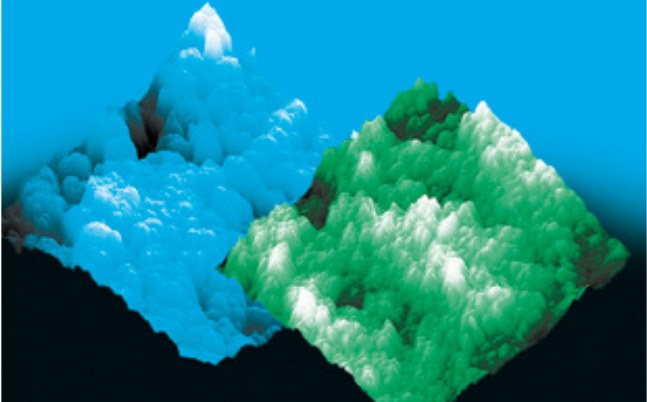
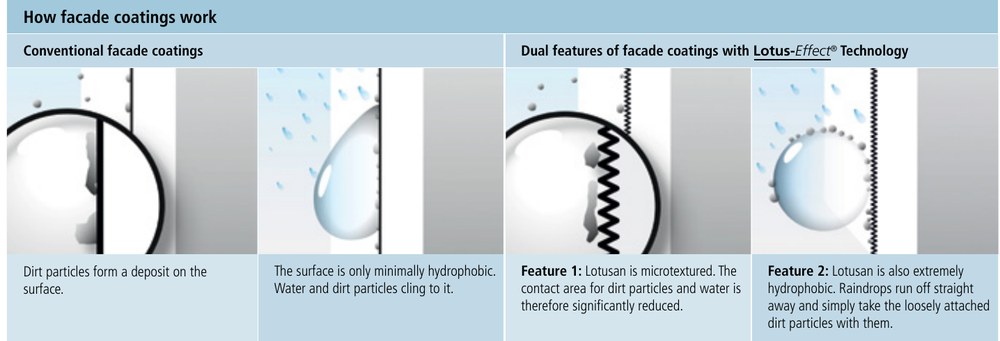
StoColor Lotusan is a self-cleaning facade paint built on Lotus-Effect® Technology, a principle taken from the lotus leaf. Under a microscope the leaf surface is finely nubbed, so dirt particles cling only to the highest points and raindrops carry them away. Lotusan reproduces this with two features: a microtextured surface that reduces the contact area for dirt and water, and extreme water repellency, so rain runs straight off and takes loosely attached dirt with it. Sto's brochure gives a raindrop contact angle above 140°.
The technical data sheet describes StoColor Lotusan G as a matt facade paint with reduced adhesion of dirt particles and self-cleaning when exposed to rain. It has very high water vapour permeability (sd 0.01 m, class V1) and encapsulated film protection, suits mineral and organic substrates, and is applied by brush, roller or airless sprayer. Sto recommends a double coat for the best water-repellent effect.
It is not maintenance-free, and the documentation is clear about the limits. Under sustained moisture the drip-off effect is not continuously maintained, although it is restored after drying. Facade surfaces already affected by algae or fungi must be carefully cleaned and treated before overcoating. Lotusan is supplied white with limited tintability within the StoColor System, and it is not suitable for horizontal or sloping surfaces exposed to weathering, such as joint areas in masonry.
StoColor Lotusan downloads
StoColor Maxicryl: acrylate facade paint for intense colour
StoColor Maxicryl is a pure acrylate facade paint for maximum colour shade variety and stability. Its technical data sheet lists very good hiding power, very good adhesion, alkali resistance and very high water repellency, together with water vapour permeability (sd 1.14 to 1.33 m, class V2). It is designed for paint coats in intense colour shades on mineral and organic substrates, and it is applied by brush, roller or airless sprayer.
Maxicryl is the straightforward choice when the brief is a rich, stable colour and neither the dirt-shedding behaviour of Lotusan nor the heat reflection of X-black is the deciding requirement. It is supplied white and tinted in accordance with the StoColor System and, like X-black and Lotusan, it is not suitable for horizontal or sloping surfaces subject to weathering.

StoColor Maxicryl downloads
StoColor Lastic: elastomeric facade paint for minor cracks
StoColor Lastic is an elastomeric facade paint on an emulsion base. Its data sheet describes it as highly elastic and cold-elastic, with UV-crosslinking and very high resistance to soiling for such a highly elastic paint. It is a silk matt coating with very good hiding power and very high water repellency.

Its purpose is crack-bridging. In the Sto crack repair system it works as both intermediate coat and finish for cracks up to 1.0 mm wide, and a double coat is suitable for crack widths up to 1.2 mm (class A3 under EN 1062-7). Optimal crack-bridging is only possible with a double coat. The capability has limits. Lastic is intended for facades with a low risk of substrate movement and damage; where that risk exists, Sto's guidance is to use a StoArmat render system instead, as set out under exterior render repair systems. It is also the least vapour-open paint in the range (sd 1.6 m, class V3), it is not suitable for lime-containing substrates or for horizontal and sloping surfaces, and it is not for areas contaminated with plasticiser or paraffin, for example from paint remover that has not been fully removed.
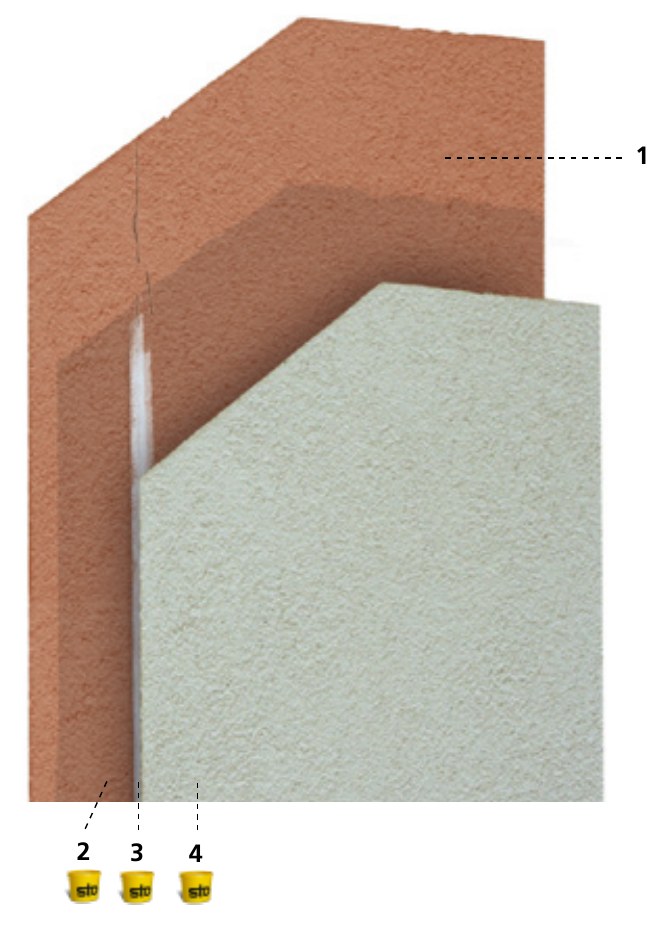
StoColor Lastic is also the coating in the StoColor Lastic Satin Coating System, Sto's coating-only refurbishment option. The refurbishment page covers that system in full, including its warranty.
StoColor Lastic downloads
How to choose the right exterior facade paint
Start with what the facade needs to do, then confirm the substrate and the colour.
| If your priority is | Consider | Watch for |
|---|---|---|
| Dark or black facade colours in direct sun | StoColor X-black | Factory-tinted; use one batch number on continuous areas |
| A facade that stays cleaner, with less dirt adhesion | StoColor Lotusan | Not maintenance-free; algae-affected surfaces need cleaning and treatment first |
| Rich, stable colour on mineral and organic substrates | StoColor Maxicryl | Not for horizontal or sloping surfaces subject to weathering |
| Bridging minor cracks on a low-movement existing facade | StoColor Lastic | Not for lime substrates; least vapour-open; use a render system where movement is a risk |
If a facade is already cracking because it is moving, no facade paint is the answer. Lastic is designed for low-movement facades, and above that level a reinforced render repair is the right response. For a wider look at the factors behind a facade paint decision, read our guide, How to Choose the Right Exterior Facade Paint. And where a project involves an existing or third-party substrate, a Sto consultant can advise on the most appropriate paint for the substrate, the exposure and the design intent.
Colour: the StoColor System and matching
Colour for all four paints is specified through the StoColor System, which offers 800 shades and can be matched to any colour using the Sto Spectrometer. The StoColor System page is the planning tool for choosing shades.
Tinting differs by paint, so plan for it. X-black is factory-tinted and cannot be tinted by the applicator. Lotusan is supplied white with limited tintability. Maxicryl and Lastic are supplied white and tinted in accordance with the StoColor System. The data sheets also note that weather, moisture, UV radiation and deposits can change a coating's surface appearance over time, and that slight shade differences between deliveries are possible, so material with the same batch number should be used on one surface.
Applying Sto facade paint: what the data sheets require
Each paint's technical data sheet sets the same core conditions. The substrate must be firm, dry, clean and load-bearing, and free from sinter layers, efflorescence and release agents. Damp or not fully cured substrates can cause defects such as bubbling and cracking in the coating. Existing coatings must be checked for load-bearing capacity, and any that are not must be removed. Depending on the substrate, a consolidating, absorbency-regulating primer may be needed, and on mineral substrates an absorbency-equalising, adhesion-promoting primer is recommended (required for Lotusan). Air and substrate temperature must be between +5°C and +30°C, with the substrate above the dew point.
The technical values in each data sheet are based on a double coat. At 20°C and 65% relative humidity, X-black, Lotusan and Maxicryl can be overcoated after about eight hours and Lastic after about twelve, and higher humidity, lower temperatures and low air exchange all extend drying. Consumption is indicative only, from about 0.15 litres per square metre per coat for X-black and Maxicryl to 0.35 to 0.45 for Lastic, and should be confirmed for the project.
Sto facade paint with Sto systems
Sto facade paint is designed to sit within Sto's wider systems. The four StoColor paints are the coating options in the StoArmat Remedial Render System, and in Sto render systems they form the final layer over the finishing render. For new construction, see Sto render systems. For external wall insulation, see the StoTherm insulation system. For coloured finishing renders that sit beneath the paint, see Sto finishing renders.
Data sheets, brochures and sustainability information
Each paint has a technical data sheet and a safety data sheet. Lotusan, Maxicryl and Lastic also have a sustainability data sheet, and X-black, Lotusan and Lastic have a brochure. The technical data sheet covers properties, substrate preparation, application and consumption. The safety data sheet covers hazards, handling and disposal. The sustainability data sheet lists composition, VOC content and emissions data of the kind used in green building assessments such as DGNB and LEED.
Lotusan, Maxicryl and Lastic are listed as plasticiser-free, and all four are water-based. The paints contain film-protection additives, so read each safety data sheet before specifying. Sto's manufacturing is certified to ISO 9001 and ISO 14001. These documents are issued by Sto SE & Co. KGaA and follow European regulations, so for project-specific compliance questions speak to a Sto consultant.
Downloads for each paint sit in its own section above: X-black, Lotusan, Maxicryl and Lastic.
Frequently Asked Questions
What is the difference between StoColor X-black, Lotusan, Maxicryl and Lastic?
Each is built for a different job. X-black is a heat-reflective facade paint for dark colours. Lotusan is a self-cleaning facade paint that reduces dirt adhesion. Maxicryl is a pure acrylate paint for intense, stable colour. Lastic is an elastomeric paint that bridges cracks up to 1.0 mm wide, or 1.2 mm with a double coat, on facades with a low risk of movement. All four are water-repellent and can be applied by brush or roller.
Can a facade be painted a dark colour without excessive heat build-up?
StoColor X-black is designed for this. Its near-infrared reflective pigments reduce solar heating of the facade surface, and Sto's brochure puts temperature peaks below 70°C, compared with 80 to 85°C for standard dark pigments. It is factory-tinted rather than tinted on site, and it is not suitable for horizontal or sloping surfaces subject to weathering. A Sto consultant can confirm suitability for your substrate and colour.
Does StoColor Lotusan really clean itself?
Rain does the cleaning. Lotusan's microtextured, extremely water-repellent surface reduces how well dirt particles adhere, so raindrops run off and carry loosely attached dirt away. It is not maintenance-free. Under sustained moisture the effect is not continuously maintained, although it is restored after drying, and surfaces already affected by algae or fungi must be cleaned and treated before overcoating.
How many coats do Sto exterior facade paints need?
The technical data for all four paints is based on a double coat, and further coats may be needed depending on the substrate and colour. Lotusan's best water-repellent effect and Lastic's best crack-bridging both depend on applying two coats. At 20°C and 65% relative humidity, overcoating can take place after about eight hours for X-black, Lotusan and Maxicryl and about twelve hours for Lastic.
Can Sto facade paint be applied over an existing painted facade?
Yes, provided the existing surface is sound. The data sheets require the substrate to be firm, dry, clean and load-bearing, existing coatings must be checked for load-bearing capacity, and weak or non-load-bearing coatings must be removed. A primer may be needed, and Lastic is not suitable for lime-containing substrates. Talk to a Sto consultant before specifying over an existing coating.
Which colours are available?
All four paints draw on the StoColor System, which offers 800 shades and can be matched to any colour using the Sto Spectrometer. X-black is factory-tinted, Lotusan has limited tintability, and Maxicryl and Lastic are tinted in accordance with the StoColor System. A Sto consultant can confirm what is available for your chosen shade.
Talk to a Sto consultant about your facade paint
Tell us about the substrate, the colour you have in mind and how exposed the facade is, and a Sto consultant will recommend the right paint. Request a quote, call +61 3 9768 4900 or email [email protected]. Our team is available Monday to Friday, 7:00am to 3:30pm.