
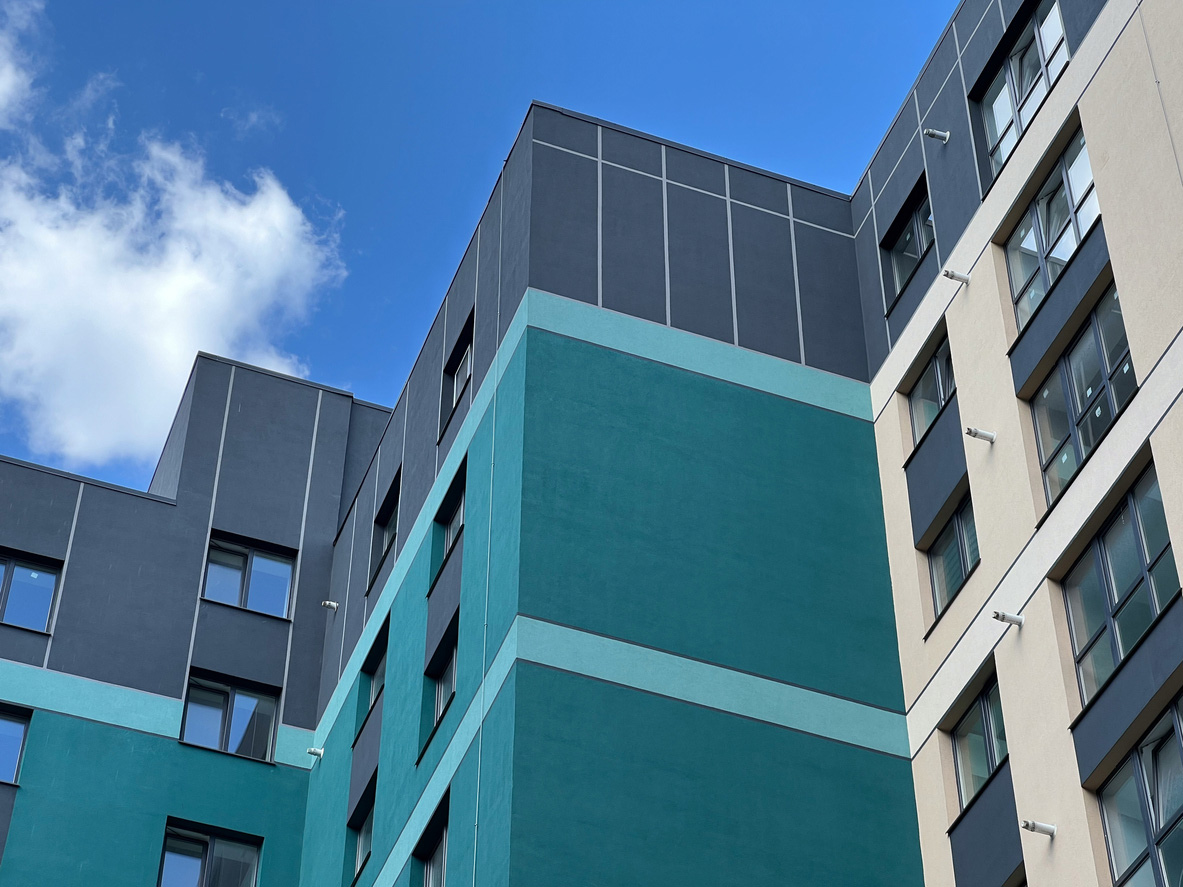
Render System Performance: What Architects and Specifiers Need to Know
Render system performance is the single factor most likely to determine whether a facade holds up over the life of a building — or becomes a maintenance liability within a decade. For architects, specifiers, and builders working across Australia's varied climate zones, the choice of render system affects crack resistance, weathertightness, compliance confidence, and long-term warranty protection. Sto Australia's render systems are engineered to a measurably higher performance standard than cement-based alternatives, independently verified through BRANZ appraisal and backed by nearly two centuries of German facade-systems research.
What Is a High-Performance Render System?
A render system is more than a decorative coating — it's a multi-layer facade solution that protects the building envelope from moisture, UV exposure, structural movement, and impact, while defining the building's final appearance. Traditional cement-based renders are rigid: strong under static load, but poorly equipped to accommodate the thermal expansion, structural settlement, and vibration that every building experiences over its lifetime. That rigidity is exactly why cement render cracks — predictably, and often within the first few years of a building's life.
Sto's render systems take a different approach. At the core of every Sto render system is StoArmat, an organic, cement-free reinforcement render engineered for flexibility rather than rigidity. Where cement render resists movement until it fails, StoArmat is designed to flex and absorb that movement — dissipating stress rather than concentrating it at failure points. The result is a facade that stays intact, weathertight, and visually consistent for significantly longer than a cement-based equivalent, verified through independent BRANZ appraisal rather than manufacturer claims alone.
Who This Matters For
This page is written for architects, specifiers, building consultants, commercial builders, and developers evaluating render systems for commercial, institutional, multi-unit residential, heritage, or boutique architectural projects. If your project sits in Australia's coastal, high-UV, or climate-variable zones — or if a previous cement render has already failed and needs replacing — render system performance is not a secondary consideration. It's the specification decision that determines whether the facade needs attention again in five years or in twenty.
Sto's technical consultants work directly with project teams from early specification through to completion, providing plan review, mockup assistance, and a comprehensive CAD/PDF detail library — support that goes beyond product supply into genuine technical partnership.
The Performance Factors Architects Evaluate
Four factors consistently determine how a render system performs over the life of a building. Here's how Sto's systems are engineered against each.
Crack Resistance
StoArmat's organic, cement-free formulation delivers crack resistance six times higher than cement-based render, demonstrated through bend testing that shows the render's elasticity under stress. For architects, this translates directly into fewer callbacks, lower long-term maintenance costs, and a facade that holds its finish for the duration of the warranty period.
Impact Resistance
StoArmat achieves impact resistance of up to 50 joules — a meaningful specification advantage for high-traffic commercial and institutional projects, car park facades, and any building element exposed to accidental impact or wind-borne debris. This is demonstrated through standardised ball-drop testing rather than asserted as a general claim.
Weathering and Climate Performance
Australia's climate zones place different demands on a facade — from coastal salt exposure, to intense UV in the north and west, to the thermal cycling of inland regions. Sto's render and coating systems are engineered and tested for these conditions, including how render performs under extreme heat and UV exposure and self-cleaning coating technologies within the broader Sto system range.
Compliance and Certification
Sto Australia holds multiple BRANZ Appraisals — the long-standing agency claim is nine appraisals covering twelve systems — certifying compliance with the structural, weathertight, and durability requirements of the National Construction Code (NCC) / Building Code of Australia (BCA). For specifiers, this means compliance confidence backed by independent testing rather than manufacturer assurance alone.
The Difference: Why Architects and Specifiers Choose Sto
Sto's performance data isn't a marketing claim — it's independently demonstrated. StoArmat's 6x crack resistance and 50-joule impact resistance are shown through bend and ball-drop testing rather than asserted outright, and Sto's BRANZ appraisal depth — nine appraisals covering twelve systems — represents a level of independently verified compliance coverage that few facade system suppliers in the Australian market can match.
That performance is backed by warranty depth to match: the StoArmat Warranty extends up to 20 years, one of the most comprehensive facade system warranties available in Australia, and it's supported by StoService Assurance — scheduled inspections, cleaning, and minor repairs every 2.5 years to help the facade perform for the life of the warranty, not just at handover.
Behind all of it sits nearly two centuries of German facade-systems research. Sto Group's organic, cement-free render technology dates back to 1955, and that R&D pipeline continues to inform every system Sto Australia specifies today — a depth of facade-specific research history few competitors, regardless of size, can offer.
From Specification to Completion: How It Works
Specifying a Sto render system follows a consistent process, from first enquiry through to a completed, warrantied facade:
- Initial consultation — a Sto technical consultant discusses your project's substrate, climate exposure, and performance requirements.
- System selection — the right render system is matched to your specific substrate (concrete block, render brick, EPS, AAC panel, AFS Logicwall, Knauf Permarock, or cement sheet) and performance needs.
- Specification support — plan review, mockup assistance, and access to Sto's CAD/PDF detail library to support documentation.
- Installation — carried out exclusively by Sto-registered contractors, ensuring the system is applied to specification and the warranty remains valid.
- Warranty activation — coverage of up to 20 years begins on correctly specified and installed systems.
- Ongoing StoService Assurance — scheduled inspections, cleaning, and minor repairs every 2.5 years to maintain performance across the warranty period.
What to Expect
Timelines vary by project scope and substrate, but most projects move from initial technical consultation to a confirmed specification within a matter of weeks, not months — plan review and mockup assistance run in parallel with the broader design process rather than delaying it. Because installation is carried out exclusively by Sto-registered contractors, the specification and the on-site outcome are directly connected: what's documented in the plan review is what gets installed, reducing the gap between specification intent and built reality that can otherwise erode facade performance.
Investment and Specification Support
Sto operates on a custom, quote-based model — there's no published price list, consistent with a premium, specification-led B2B approach where system selection, substrate, and project scope all affect cost. Rather than a generic estimate, Sto's technical consultants provide project-specific quotes once the substrate and performance requirements are understood, alongside the plan review and mockup support needed to specify with confidence. Request a Quote to start that conversation, or contact Sto Australia directly on +61 3 9768 4900 or email to discuss your project's requirements with a technical consultant.
Proven on Australian Projects
Architects and specifiers rarely leave public product reviews — credibility in this industry is demonstrated through built projects and professional relationships instead. Sto render systems feature across major Australian commercial, civic, and residential projects, including the Gunyama Park Aquatic and Recreation Centre in Sydney (StoArmat Miral render system with a Stolit MP Natural finish, selected for its design flexibility across curved and flat surfaces), Bunjil Place in Victoria (StoMiral over Knauf Permarock with a Stolit Milano finish), and UTS Sydney (StoVentec R system, specified by Durbach Block Jaggers and BVN).
Sto Australia maintains ongoing professional relationships with leading architectural firms, including Durbach Block Jaggers & BVN, Francis-Jones Morehen Thorp, Cera Stribley Architects, Grimshaw Architects, and Parsonson Architects — the kind of repeat specification relationship that reflects performance holding up in practice, not just on paper.
Ready to Specify a Render System That Performs?
Render system performance sits alongside two more specific considerations worth understanding in depth: how organic render compares structurally to cement-based render, and how Sto's coating technology holds up under sustained heat and UV exposure. Explore the full range of Sto render systems for a complete view of the substrate-matched systems available.
Ready to specify a render system that performs to a verified standard, not just a claimed one? Request a Quote to start a project-specific conversation with a Sto technical consultant.
Frequently Asked Questions
How much higher is StoArmat's crack resistance than cement render?
StoArmat delivers crack resistance up to six times higher than standard cement-based render products, demonstrated through bend testing. This comes from StoArmat's organic, cement-free formulation, which flexes with structural movement rather than resisting it until it fails.
Is StoArmat BRANZ appraised?
Yes. Sto Australia holds multiple BRANZ Appraisals across its Australian render and facade systems — the long-standing claim is nine appraisals covering twelve systems — certifying compliance with the structural, weathertight, and durability requirements of the NCC/BCA.
What substrates can Sto render systems be applied to?
Sto render systems are engineered for a range of substrates, including concrete block, render brick, EPS, AAC panel, AFS Logicwall, Knauf Permarock, and cement sheet construction. The right system is matched to your specific substrate during the technical consultation stage.
How long is the warranty on a Sto render system?
The StoArmat Warranty extends up to 20 years on correctly specified and installed systems — one of the most comprehensive facade system warranties available in Australia. It's supported by StoService Assurance, which provides scheduled inspections, cleaning, and minor repairs every 2.5 years across the warranty period.
Who installs Sto render systems?
Installation is carried out exclusively by Sto-registered contractors. This ensures the system is applied to specification and keeps the warranty valid — installation quality has a direct effect on long-term render system performance.
Last updated August 2026