
Stolit K Render: A Stippled Finishing Render for Sto Systems
Last updated 17 November 2026
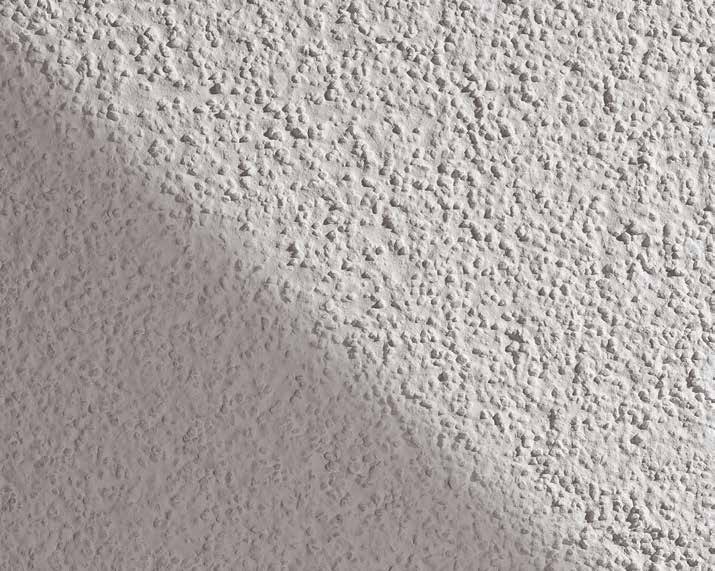
Stolit K render is Sto's stippled finishing render: a coloured, cement-free topcoat that gives a facade an even, textured surface and long-term weather protection. Engineered in Germany and supplied by Sto Australia in four grain sizes, it is designed for architects, specifiers and builders who want a durable textured finish with a wide choice of colour.
This page covers what Stolit K is, the grain sizes and colours available, where it can and can't be used, and how it is applied. To compare it with the rest of the range, see our Sto finishing renders overview, or go straight to the Stolit K technical data sheet.
What is Stolit K render?
Stolit K is an organic, cement-free finishing render, and one of Sto's classic acrylic render finishes. Its acrylic-resin binder is combined with natural white marble grain, and the mix arrives ready to use in a 25kg pail, tinted to your chosen colour. Applied over a Sto base coat, it forms the final, visible layer of the facade: the layer that carries the colour, sets the texture and takes the weather.
The "K" refers to the stippled texture. Once the render is trowelled to the thickness of its grain, the surface is worked with a plastic trowel or float to produce an even, granular finish. That evenness helps a stippled facade look flatter and more uniform than a smooth floated surface, which can show every trowel mark.
Sto's organic finishing renders have been applied in every climatic zone for more than 50 years. Stolit K is highly water-repellent and weather-resistant, yet it stays permeable to water vapour, so the wall can breathe while the surface sheds water. Because the colour runs through the render rather than sitting in a paint film, everyday wear does not expose a different colour underneath.
A stippled render finish in four grain sizes
Stolit K is available in 1.0mm, 1.5mm, 2.0mm and 3.0mm grain sizes. The grain sets how fine or coarse the textured render finish appears and how much material the coat uses, so it is worth choosing early in the design process.
 Stolit K 1.0mm
 Stolit K 1.5mm
 Stolit K 2.0mm
 Stolit K 3.0mm
Choosing between Stolit K 1.0mm, 1.5mm, 2.0mm and 3.0mm
The finer grains, Stolit K 1.0mm and 1.5mm, give a tight, refined texture. The coarser grains, Stolit K 2.0mm and Stolit K 3.0mm, give a more pronounced stippled surface. Sto's technical data sheet notes that where the grain size is under 2.0mm, additional measures to level the substrate may be needed, so the finest textures call for the most careful base preparation.
Material use rises with grain size. As a guide, Stolit K needs about 1.8 kg/m² at 1.0mm, 2.3 kg/m² at 1.5mm, 3.0 kg/m² at 2.0mm and 4.3 kg/m² at 3.0mm, although actual consumption depends on the substrate, application and consistency.
A coloured finishing render, tinted from the StoColor System
Stolit K is supplied white and tinted to colour. It can be tinted to any shade in the StoColor System, an 800-colour architectural palette, and custom colours can be matched using the Sto Spectrometer.
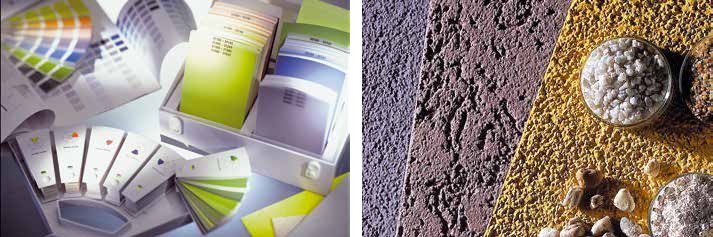
Three points are worth settling at specification stage. First, shades with a low light reflectance value are assessed by Sto on a project-specific basis for the system they will be used on, so raise intense or very dark shades early. Second, strong colours can change over time with weathering, UV exposure and moisture, and Sto advises that additional coating improves the colour stability of intense or very dark shades. Third, the texturing grain is natural white marble, so its natural graining can show as darker flecks, and in light, clear yellow shades the grain colour can read through across an area. This is a property of a marble-filled render rather than a defect. A site sample, which Sto can help you prepare, shows how your chosen shade and grain will look.
Where Stolit K is used
Stolit K is an exterior finishing render. It is applied over a Sto base coat on masonry, insulated and rainscreen cladding facades, on both mineral and organic substrates. In practice it is specified as the finishing layer of a Sto render system: the substrate and base coat are chosen first, and Stolit K is selected to suit. Browse our Sto render systems by construction type, or see how a render finish works on StoVentec R, Sto's ventilated rainscreen system.
Stolit K is not designed for horizontal or sloping surfaces that are exposed to weathering, where water would otherwise sit on the surface. Sto's render systems are BRANZ appraised, and appraisal coverage is specific to each system and substrate, so confirm with a Sto consultant which appraisal applies to your project.
Stolit K technical performance
The figures below come from Sto's Stolit K technical data sheet. They are average values, and because the render uses natural raw materials they can vary slightly between batches without affecting suitability. The test methods are European (EN) standards, as published by the manufacturer.
| Property | Value | Test method / note |
|---|---|---|
| Pack size | 25kg pail | — |
| Grain sizes | 1.0mm, 1.5mm, 2.0mm, 3.0mm | — |
| Density | 1.7–1.9 g/cm³ | EN ISO 2811 |
| Water permeability rate (w) | Less than 0.05 kg/(m²·h0.5), class W3 (low) | EN 1062-1 |
| Water vapour diffusion-equivalent air layer thickness (sd) | 0.18–0.19m, class V2 (medium) | EN ISO 7783; determined for the 2.0mm grain |
| Approximate consumption | 1.0mm: 1.8 kg/m² · 1.5mm: 2.3 kg/m² · 2.0mm: 3.0 kg/m² · 3.0mm: 4.3 kg/m² | Guide only; depends on substrate, application and consistency |
| Application temperature | +5 °C to +30 °C (substrate and air) | Not in intense direct sunlight or onto heated substrates |
| Overcoating | After 24 hours at the earliest | At about 20 °C and 65% relative humidity |
Scroll sideways to see the full table.
In plain terms, the low water permeability rate shows that the surface resists liquid water, while the medium vapour class means moisture vapour can still pass through the wall. When Stolit K is combined with a StoTherm insulation system, it also offers shockproof, crack-resistant performance.
Applying Stolit K
Stolit K is applied by trained Sto-registered applicators over a prepared base coat. The substrate must be firm, dry, clean and load-bearing, and free of sinter layers, efflorescence and release agents; damp or not fully cured substrates can cause bubbling and cracking in the coating. On mineral substrates, Sto recommends an absorbency-equalising, adhesion-promoting intermediate coat, and leaving it out can affect both application and appearance.
The render goes on by hand or by machine, using a hopper gun or a fine render sprayer. It is trowelled off evenly to the grain size with a rust-free steel trowel, then textured with a hard plastic trowel or a PU float, and the freshly applied render is normally reworked by hand to achieve the intended texture. Because the method, tools and substrate all influence the result, a consistent approach across an elevation matters.
Stolit K is applied between +5 °C and +30 °C at the substrate and in the air, out of intense direct sunlight and never onto heated substrates. Strong air movement during application and early drying can increase shrinkage cracks and pores. At around 20 °C and 65% relative humidity, it can be overcoated after 24 hours at the earliest; thicker layers, higher humidity, condensation and low temperatures can lengthen that. Freshly rendered facades should be protected from rain until they are dry.
Stolit K data sheets and downloads
All data sheets for Stolit K are available below. The technical data sheet and the sustainability data sheet cover all four grain sizes, and a material safety data sheet is provided for each size. Please check that you are working from the current versions before you specify, and contact Sto Australia if you need help finding the right document for your project.
A finish with a track record
Stolit K is part of a range of coloured finishing renders that Sto has refined for decades, engineered in Germany by a group with ISO 9001 and ISO 14001 certified management systems. In Australia it has been used as the finishing render on projects such as the Rosebery Early Childcare Learning Centre by Neeson Murcutt & Neille, alongside StoArmat render. Within the same family, Stolit Milano offers a smooth finish and Stolit MP a fine finish, so you can compare textures before you specify.
Specify Stolit K with Sto Australia
Sto Australia's technical consultants can help you choose a grain size, check shade suitability and match Stolit K to your substrate and render system, with plan review and mock-up assistance available. Tell us about your substrate, elevation and preferred shade, and a consultant will respond during business hours, Monday to Friday, 7:00am to 3:30pm. Request a quote or call +61 3 9768 4900.
Frequently asked questions
What is Stolit K finishing render used for?
Stolit K is the coloured, textured topcoat of a Sto render system on exterior facades. It is applied over a Sto base coat on masonry, insulated and rainscreen cladding facades, and it provides the colour, the stippled texture and much of the weather protection. It is not a paint, and it is not intended for horizontal or sloping surfaces exposed to weathering.
How do I choose between Stolit K, Stolit MP and Stolit Milano?
The choice is mainly about texture. Stolit K gives a stippled finish in four grain sizes, Stolit MP gives a fine finish, and Stolit Milano is a very fine, smooth finish for interior or exterior walls. You can compare all three, with data sheets, on the Sto finishing renders page, and a Sto consultant can help you match a texture to your design.
Can Stolit K be tinted to any colour?
Stolit K can be tinted to any shade in the StoColor System, and custom shades can be matched with the Sto Spectrometer. Shades with a low light reflectance value are assessed by Sto for the specific system and project, so very dark or intense colours should be raised early. Strong colours can also change with weathering and UV exposure, and additional coating improves their colour stability.
How long does Stolit K take to dry?
Stolit K dries physically as water evaporates. At about 20 °C and 65% relative humidity it can be overcoated after 24 hours at the earliest. Thicker layers, higher humidity, condensation, low temperatures and poor air exchange can all slow drying, so allow extra time in cool or damp conditions.
Why does a freshly applied finish sometimes look patchy after rain?
If rain, fog or condensation reaches a coating before it is fully dry, processing aids can be released and build up on the surface. How visible this is depends on how intense the colour is. It does not affect product quality, and the effect fades as the surface weathers. Protecting the facade while it dries reduces the risk.